

Robert and Hana Tisserand
This is an updated and expanded version of this article, originally published in January 2016.
Feeling unusually sad is not uncommon in the winter months, especially in places that experience only a few hours of daylight. But there is a difference between a mild winter blues and Seasonal Affective Disorder, with the latter being a subset of major depression with all the negative impacts of this condition. Winter-pattern SAD is well known, while the summer-pattern condition is relatively new. It may be triggered by extreme heat, especially with high humidity, and long days disrupting sleep. The condition is formally known as Major Depressive Disorder with a Seasonal Pattern. Researchers believe it is caused by minimal sunlight, which reduces melatonin and serotonin levels, and adversely affects circadian rhythms.
Diagnosis of SAD includes depressive symptoms that appear in a seasonal pattern. They begin and end during a specific time frame, and do not manifest during other seasons. For a diagnosis, the symptoms need to be present for at least two consecutive years. The degree of SAD severity can vary, from mild cases to debilitating episodes of deep depression.
Symptoms include difficulty waking up in the morning or other circadian rhythm disturbances, tendency to oversleep and overeat, cravings for carbohydrates, lack of energy, decreased sex drive, difficulty concentrating or completing tasks and withdrawal from friends, family and social activities. Summer-pattern SAD can involve lack of appetite and consequent weight loss, irritability, anxiety and agitation (Melrose, 2015).
It is worth noting that SAD impacts women four times more often than men. It is more common in people living further from the equator – the places that experience long periods of diminished daylight. People with hypothyroidism, and shift workers with limited exposure to daylight, are more at risk.
Why do we get SAD?
Many species naturally decrease their activity during winter months, as food sources are diminished and there is insufficient sunlight to go hunting for whatever is still available. Some animals, such as bats, bears and hedgehogs, even choose near total hibernation, sleeping through the winter months to awaken when the sun is high and food is abundant.
 There is some evidence suggesting that Neanderthals also hibernated based on patterns of bone growth, and while this may not have been a full hibernation, they probably spent the harshest winter months in a shelter, consuming whatever food reserves they had collected (see this article from the Guardian, accessed February 27, 2026). It is fair to assume that pre-industrial human societies went through periods of relatively low activity when the fields lay dormant (see here, accessed February 27, 2026).
Modern humans cannot afford to slow down when the days grow short, and with artificial light and heated dwellings, we’ve done a good job of tricking our bodies into year-round activity. However, we need to face the ramifications of ignoring our natural circadian rhythms as well as the cycles of nature. Summer-pattern SAD may stem from similarly ignoring our natural instinct to avoid high-heat periods during the day by seeking shade and resting.
Neurotransmitters
There is likely not a single cause for SAD but scientists have identified several physiological suspects – neurotransmitters. Decreased serotonin affects mood, and norepinephrine and dopamine are associated with depression. Reduced sunlight triggers an increase in melatonin, disrupting sleep, and this is perhaps more specific to SAD.
SAD has been most strongly linked to reduced levels of serotonin, an important feelgood neurotransmitter. Since eating carbohydrates increases serotonin levels, this may explain the tendency to binge on carbs in the winter. However, postmortem examination of the hypothalamus shows minimal serotonin in the months of December and January even in the general population, suggesting that this is not sufficient in itself to cause SAD (Gupta 2013, Levitan 2007). At the same time, carb cravings and excessive sleep are considered to be unique to winter SAD.
Studies have shown that dopamine depletion causes a temporary worsening of symptoms in SAD patients. Dopamine is associated with reward pathways in the brain, and may also be linked to binge eating. Fatigue and lethargy in SAD are very likely associated with low levels of dopamine and norepinephrine (Levitan 2007).
Melatonin is a hormone produced by the pineal gland when there is very little light, and it signals our body to sleep. However, if we choose to ignore those signals, our sleep rhythms may be thrown off balance. We naturally produce more melatonin in winter months, and overproduction of this hormone has been linked to SAD. Similarly, lack of melatonin has been implicated in summer pattern SAD (according to this NIH resource, accessed February 27, 2026).
Vitamin D
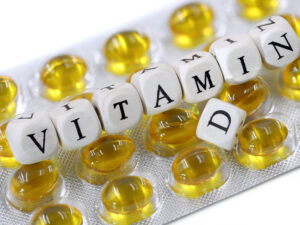 Vitamin D is essential for the proper absorption of calcium, for our bone and muscle health, as well as the optimum functioning of our immune and nervous systems. Vitamin D is produced in our bodies through sun exposure to our skin. A diet rich in oily fish, and of course vitamin D supplements, can also be helpful when there is deficiency.
Prolonged vitamin D deficiency in childhood leads to a condition known as rickets, which results in weakened bones and impaired musculo-skeletal development. It is most common in developing nations, but it’s not uncommon throughout the world. A lack of this vitamin in adulthood can negatively impact bone density and proper functioning of the thyroid gland. Symptoms include fatigue and depression (see here, accessed February 27, 2026).
Since there is limited available sunlight during winter months, vitamin D deficiency has been explored as a potential cause for SAD. Indeed, decreased levels of vitamin D were observed in people suffering from SAD, and there is a similar association with depression. Studies using vitamin D supplementation to address either SAD or clinical depression have shown promising results (Jahan-Mihan et al 2024). Vitamin D has also been linked to the regulation of serotonin and melatonin. This is a relatively new area of research with tentative results so far, though potentially impactful in the context of SAD and sleep hygiene (Huiberts & Smolders 2021).
Addressing SAD
Recommended treatments for SAD include light therapy, vitamin D supplements and antidepressants. Essential oils can also be a helpful, and we explore their impact in more detail below.
Light therapy, also known as bright light therapy, is the most commonly used management tool for winter-pattern SAD. This involves using artificial light that mimics the color composition of natural sunlight, helping to recreate a more regimented sleep cycle as well as to produce more vitamin D.
Other interventions, especially medications that regulate the production of neurotransmitters implicated in SAD, are considered for cases of severe SAD – where there is a major negative impact on daily life and functioning.
Essential oils and SAD
It is clear from the exploration of SAD that this condition, while being rooted in the physical body, also has a strong psychological component. Since essential oils address both aspects, this makes them especially promising candidates to help manage SAD.
It has long been claimed by aromatherapists that essential oils can positively affect mood, and scientific studies are now providing good evidence for such effects, as well as explanations of how they work. Inhalation is an efficient mode of administration for impacting neurological function, as the olfactory receptor sites in our nasal epithelium have a direct link to the brain, via the olfactory nerves. Scent inputs are then processed in the same regions of the brain as emotion and memory, and at the same time the molecules themselves impact us physiologically.
In a 2013 paper, researchers at Xiamen University, China, commented: “Most studies, as well as clinically applied experience, have indicated that various essential oils, such as lavender, lemon and bergamot can help to relieve stress, anxiety, depression and other mood disorders. Most notably, inhalation of essential oils can communicate signals to the olfactory system and stimulate the brain to exert neurotransmitters (e.g. serotonin and dopamine) thereby further regulating mood.” (Lv et al 2013).
A rodent study revealed another mechanism by which an inhaled essential oil impacted neurotransmitter availability. Lavender oil binds to SERT, a transporter protein that removes serotonin from nerve endings, thereby resulting in more available serotonin (López et al 2017).
Essential oils and depression
Studies on depression and the sense of smell show that clinical depression is associated with reduced olfactory sensitivity (Negoias et al 2010, Schablitzky and Pause 2014). However, this may not apply to SAD, where researchers find the opposite – an increased olfactory sensitivity, especially in the right nostril, which corresponds to the right side of the brain (Postolache et al 1999, Postolache et al 2002). This increased sensitivity suggests that people with SAD may be especially responsive to aromatherapy.
At the time of writing we could find no research on essential oils and SAD specifically, but since it is broadly considered a type of depressive disorder, research on depression has relevance.
A 2016 clinical study (Dong & Jacob, 2016) showed that combining inhaled essential oils with bright light therapy significantly reduced blood pressure and heart rate in 14 healthy male and female students. Lemon and lavender oils showed the most significant effect, and they also improved the results of a self-reported mood questionnaire (POMS+), especially in the areas of anxiety and depression.
Many studies have found that vaporized citrus oils are particularly effective for mood enhancement. In one, a mixture of bergamot, orange and lemon (with lemon predominating) was slowly vaporized throughout the day over a two-week period, and depressed patients exposed to this fragrance were able to reduce their dose of antidepressants (Komori et al 1995a).
Bergamot and lemon oils are among the most widely-researched for positive effects on mood. Other essential oils that positively impact dopamine and/or serotonin, and are also antidepressant, include Atlas cedarwood and Eucalyptus globulus (Kako et al 2008, Martins et al 2015).
Bergamot oil and mood
 The citrus oil that has been most widely researched for mood effects in humans is bergamot. Bergamot oil inhalation, from diffusion or water-based sprays, has shown significant effects in the following situations:
* This was a randomized, open-label, crossover, controlled trial with 47 subjects. The intervention group sprayed a 1.5% concentration of bergamot oil onto a towel, before bed and on waking, for one week. The placebo group sprayed water. Depression, anxiety and stress were assessed using the DASS rating scale. Anxiety was not improved, but stress (p = 0.01) and depression (p = 0.001) were improved (Wakui et al 2023).
* In a randomized, controlled trial, there were improved sleep quality and depression scores in 29 post-partum women after four weeks of daily diffusion of bergamot oil for 15 minutes, compared with 31 controls (Chen et al, 2022).
* In this study of 109 patients awaiting surgery, bergamot oil or water were diffused for 30 minutes. Patients were assessed for anxiety both before and after the intervention. Results showed a significant reduction of anxiety in 53 bergamot patients compared to 56 control patients (Ni et al 2013).
* In a randomized, crossover trial, a reduction of the stress hormone cortisol, along with a reduction in self-reported fatigue and anxiety were seen in 41 healthy women, within 15 minutes (Watanabe et al 2015).
* In an open-label, randomized, controlled trial, changes in heart rate variability that indicate relaxation in 25 healthy females compared to 22 controls, within 15 minutes (Peng et al 2009).
* Two reports showed a reduction of work-related stress in a total of 83 elementary school teachers who inhaled bergamot oil (Chang & Shen 2011, Liu et al 2013).
Other essential oils
Aside from bergamot, other essential oils can be used to help manage some symptoms of SAD. Many are said to improve mood – some of these are more stimulating, and some are more calming (see below). However, note that a ‘relaxed alertness’ is also described for some essential oils, as is as an antidepressant effect.
Below is a shortlist of oils based on their documented effects on the nervous system. The stimulating essential oils could be especially useful for winter-pattern SAD symptoms; calming and anxiolytic effects could be harnessed for periods of agitation and increased anxiety linked to both winter- and summer-pattern SAD.
Stimulating oils
Black pepper
Black pepper is the only essential oil that has been shown to significantly increase epinephrine levels on inhalation (Haze et al 2002) and so might be useful where lethargy is a problem, but perhaps not if anxiety is high.
Grapefruit
In healthy adults, inhaled grapefruit oil was stimulating and invigorating, increasing the activity of the sympathetic nervous system by 50%, and causing a slight increase in skin temperature (Haze et al 2002). Grapefruit oil inhalation slightly increased epinephrine and norepinephrine levels. The effect was not statistically significant, but it may reveal a tendency (Haze et al 2002).
Jasmine
Jasmine absolute is widely regarded as an antidepressant. Vaporized jasmine absolute had a stimulating effect on the autonomic nervous system, resulting in greater blood oxygen saturation and increased alertness and perceived vigor (Sayowan et al 2013).
Lemon
Rodent studies show that lemon oil is antidepressant (Komori et al 1995b) and invigorating (Komori et al 2006). It also reduces anxiety and boosts both serotonin and dopamine (Komiya et al 2006).
Rosemary
Inhaled rosemary oil helps those who have difficulty concentrating (Moss & Oliver 2003, Moss et al 2003). It also acts on serotonin receptors (Martinez et al 2009). Also see here (accessed February 27, 2026).
Calming oils
Bergamot
In addition to the research on its anti-depressant effects, inhaled bergamot oil reduces anxiety and stress, and correspondingly causes reductions in blood pressure and heart rate (see citations above).
Clary sage
Clary sage oil increases both dopamine and serotonin levels, and these effects are thought to explain its notable antidepressant action in rats when injected (Seol et al 2010) and in humans when inhaled (Lee et al 2014).
Orange
Research on orange oil demonstrates that it is calming, reduces anxiety and heart rate, and improves mood (Goes et al 2012, Jafarzadeh et al 2013, Lehrner et al 2005). Orange oil does increase serotonin levels (Costa et al 2013) and it’s also been successfully used to manage dental anxiety (Czakert et al, 2024).
Rose
Inhalation of rose oil resulted in a 30% decrease of epinephrine levels (Haze et al 2002), so this would be an appropriate essential oil for stress, but not for lethargy. A rat study revealed that the antidepressant action of rose oil was associated with a significant increase in serotonin, via modulation of the serotonin signaling pathway and of tryptophan metabolism (Xia et al 2024). Tryptophan is a direct precursor to melatonin.
Sandalwood
Traditionally, Buddhists have used sandalwood oil as a therapy for anxiety, depression and insomnia, while Tibetan Monks have used it to relax the body and focus the mind. Research reveals that inhaled sandalwood oil is calming, while improving mood and increasing attentiveness (Heuberger et al 2006).
 Cautions
Be aware that some citrus oils are potentially phototoxic. If used on the skin, the maximum safe concentrations are 0.4% for bergamot, 1.25% for bitter orange, 2.0% for lemon and 4.0% for grapefruit. If using bergapten-free bergamot oil or sweet orange oil there are no maximums.
Conclusions and recommendations
If you have chosen an oil or blend that fits you the best, I recommend using a diffuser with an intermittent setting and diffusing oils in intervals of 30 to 60 minutes and then stopping for at least the same amount of time for the greatest benefit. This way the nervous system does not habituate or adapt to the olfactory stimulus. And, it’s safer – 2-3 sessions per day are usually adequate. You can also combine inhaling essential oils with light therapy for shorter, 15-minute sessions.
Other ways to integrate essential oil inhalation into your SAD protocol include using personal inhalers or scented body oils. An innovative approach would be to create a ‘summer blend’ that you use during brighter months to anchor the feeling of being basked in sunlight. Smelling this scent during the darker days of winter could bring back the emotions associated with it. Since winter is not associated with a positive mood, making a ‘winter blend’ to use during periods of summer-pattern SAD may not be useful.
You should always seek the advice of a licensed mental health practitioner if you are experiencing depressive symptoms, and you can consult them on the use of essential oils as well.
References
Chang, K.-M., & Shen, C.-W. (2011). Aromatherapy benefits autonomic nervous system regulation for elementary school faculty in taiwan. Evidence-Based Complementary and Alternative Medicine: eCAM, 2011, 1–7.
Chen, M.-L., Chen Y.-E., Lee, H.-F. (2022). The effect of bergamot essential oil aromatherapy on improving depressive mood and sleep quality in postpartum women: a randomized controlled trial. Journal of Nursing Research 30(2).
Costa, C., & Cury, T. (2013). Citrus aurantium L. essential oil exhibits anxiolytic-like activity mediated by 5-HT1A-receptors and reduces cholesterol after repeated oral treatment. BMC Complementary and Alternative Medicine, 42, 1–10.
Czakert, J., Kandil, F.I., Boujnah, H. et al (2024). Scenting serenity: influence of essential-oil vaporization on dental anxiety – a cluster-randomized, controlled, single-blinded study (AROMA_dent). Scientific Reports, 14(1):14143.
Dong, S., Jacob, T.J. (2016). Combined non-adaptive light and smell stimuli lowered blood pressure, reduced heart rate and reduced negative affect. Physiology & Behavior, 156:94-105.
Goes, T., & Antunes, F. (2012). Effect of sweet orange aroma on experimental anxiety in humans. The Journal of Alternative and Complementary Medicine, 18(8), 798–804.
Gupta, A., Sharma, P. K., Garg, V. K., Singh, a. K., & Mondal, S. C. (2013). Role of serotonin in seasonal affective disorder. European Review for Medical and Pharmacological Sciences, 17(1), 49–55.
Haze, S., Sakai, K., & Gozu, Y. (2002). Effects of fragrance inhalation on sympathetic activity in normal adults. The Japanese Journal of Pharmacology, 90(3), 247–253.
Heuberger, E., Hongratanaworakit, T., & Buchbauer, G. (2006). East Indian Sandalwood and alpha-Santalol odor increase physiological and self-rated arousal in humans. Planta Medica, 72, 792–800.
Huiberts, L. M., & Smolders, K. C. H. J. (2021). Effects of vitamin D on mood and sleep in the healthy population: Interpretations from the serotonergic pathway. Sleep Medicine Reviews, 55, 101379.
Jafarzadeh, M., Arman, S., & Pour, F. (2013). Effect of aromatherapy with orange essential oil on salivary cortisol and pulse rate in children during dental treatment: A randomized controlled clinical trial. Advanced Biomedical Research, 2, 1–10.
Jahan-mihan, A., Stevens, P., Medero-alfonso, S., Brace, G., Overby, L. K., Berg, K., & Labyak, C. (2024). The role of water-soluble vitamins and vitamin D in prevention and treatment of depression and seasonal affective disorder in adults. Nutrients, 16(1902).
Kako, H., Fukumoto, S., Kobayashi, Y., & Yokogoshi, H. (2008). Effects of direct exposure of green odour components on dopamine release from rat brain striatal slices and PC12 cells. Brain Research Bulletin, 75, 706–712.
Komiya, M., Takeuchi, T., & Harada, E. (2006). Lemon oil vapor causes an anti-stress effect via modulating the 5-HT and DA activities in mice. Behavioural Brain Research, 172, 240–249.
Komori, T., Fujiwara, R., & Tanida, M. (1995a). Effects of citrus fragrance on immune function and depressive states. Neuroimmunomodulation, 2, 174–180.
Komori, T., Fujiwara, R., Tanida, M., & Nomura, J. (1995b). Potential antidepressant effects of lemon odor in rats. European Neuropsychopharmacology, 5, 477–480.
Komori, T., Matsumoto, T., Motomura, E., Shiroyama, T. (2006). The sleep-enhancing effects of valerian inhalation and sleep-shortening effect of lemon inhalation. Chemical Senses, 31, 731-737.
Lee, K.B., Cho, E., & Kang, Y.S. (2014). Changes in 5-hydroxytryptamine and cortisol plasma levels in menopausal women after inhalation of clary sage oil. Phytotherapy Research, 28(11), 1599–1605.
Lehrner, J., Marwinski, G., & Lehr, S. (2005). Ambient odors of orange and lavender reduce anxiety and improve mood in a dental office. Physiology & Behavior, 86, 92–95.
Levitan, R. D. (2007). The chronobiology and neurobiology of winter seasonal affective disorder. Dialogues in Clinical Neuroscience, 9(3), 315–324.
Liu, S., Lin, T., & Chang, K. (2013). The physical effects of aromatherapy in alleviating work-related stress on elementary school teachers in Taiwan. Evidence-Based Complementary and Alternative Medicine, 2013, 1–7.
López, V., Nielsen, B., Solas, M., Ramírez, M. J., & Jäger, A. K. (2017). Exploring pharmacological mechanisms of lavender (Lavandula angustifolia) essential oil on central nervous system targets. Frontiers in Pharmacology, 8, 1–8.
Lv, X. N., Liu, Z. J., Zhang, H. J., & Tzeng, C. M. (2013). Aromatherapy on central nerve system (Cns): Therapeutic mechanism and its associated genes. Current Drug Targets, 14, 872–879.
Martinez, A., & Gonzalez-Trujano, M. (2013). Antinociceptive effect and GC/MS analysis of Rosmarinus officinalis L. essential oil from its aerial parts. Planta Medica, 75, 508–511.
Martins, D.F., Emer, A.A., Batisti, A.P. et al (2015). Inhalation of Cedrus atlantica essential oil alleviates pain behavior through activation of descending pain modulation pathways in a mouse model of postoperative pain. Journal of Ethnopharmacology, 175, 30–38.
Melrose, S. (2015). Seasonal Affective Disorder: An overview of assessment and treatment approaches. Depression Research and Treatment, 2015.
Moss, M., Cook, J., Wesnes, K., & Duckett, P. (2003). Aromas of rosemary and lavender essential oils differentially affect cognition and mood in healthy adults. International Journal of Neuroscience, 113(1), 15–38.
Moss, M., & Oliver, L. (2012). Plasma 1,8-cineole correlates with cognitive performance following exposure to rosemary essential oil aroma. Therapeutic Advances in Psychopharmacology, 2(3), 103–113.
Negoias, S., Croy, I., Gerber, J., Puschmann, S., Petrowski, K., Joraschky, P., & Hummel, T. (2010). Reduced olfactory bulb volume and olfactory sensitivity in patients with acute major depression. Neuroscience, 169(1), 415–421.
Ni, C., Hou, W., Kao, C., & Chang, M. (2013). The anxiolytic effect of aromatherapy on patients awaiting ambulatory surgery: a randomized controlled trial. Evidence-Based Complementary and Alternative Medicine, 2013, 1–5.
Peng, S., Koo, M., & Yu, Z. (2009). Effects of music and essential oil inhalation on cardiac autonomic balance in healthy individuals. The Journal of Alternative and Complementary Medicine, 15(1), 53–57.
Postolache, T.T., Doty, R.L., Wehr, T.A. et al (1999). Monorhinal odor identification and depression scores in patients with seasonal affective disorder. Journal of Affective Disorders, 56(1), 27–35.
Postolache, T.T., Wehr, T.A., Doty, R.L. et al (2002). Patients with seasonal affective disorder have lower odor detection thresholds than control subjects. Archives of General Psychiatry, 59(12), 1119–1122.
Sayowan, W., Siripornpanich, V., Hongratanaworakit, T. et al (2013). The effects of jasmine oil inhalation on brain wave activies and emotions. Journal of Health Research, 27(2), 73–77.
Schablitzky, S., & Pause, B. M. (2014). Sadness might isolate you in a non-smelling world: olfactory perception and depression. Frontiers in Psychology, 5(45).
Seol, G., Shim, H., Kim, P., & Moon, H. (2010). Antidepressant-like effect of Salvia sclarea is explained by modulation of dopamine activities in rats. Journal of Ethnopharmacology, 130(1), 187–190.
Wakui, N., Togawa, C., Ichikawa, K., et al (2023). Relieving psychological stress and improving sleep quality by bergamot essential oil use before bedtime and upon awakening: A randomized crossover trial. Complementary Therapies in Medicine, 77, 102976.
Watanabe, E., Kimura, M., & Rauwald, W. (2015). Effects of Bergamot (Citrus bergamia (Risso) Wright & Arn.) essential oil aromatherapy on mood states, parasympathetic nervous system activity, and salivary cortisol levels in 41 healthy females. Forschende Komplementärmedizin, 22, 43–49.
Xia, N., Wang, J., Guo, Q. et al (2024). Deciphering the antidepressant effects of Rosa damascena essential oil mediated through the serotonergic synapse signaling pathway. Journal of Ethnopharmacology, 328, 11807


0 Comments